What does a red light panel actually do?
Red and near-infrared light is absorbed by the skin and the tissue just beneath it. The research that holds up best points to two things: the appearance of the skin, and muscle recovery after exercise. Results depend on the wavelength, the intensity, and how close and consistent you are. Ellara keeps its claims there. This is a supportive part of a routine, not a medical treatment, and it will not do the dramatic things the category sometimes promises.
How close should I sit, and how long is a session?
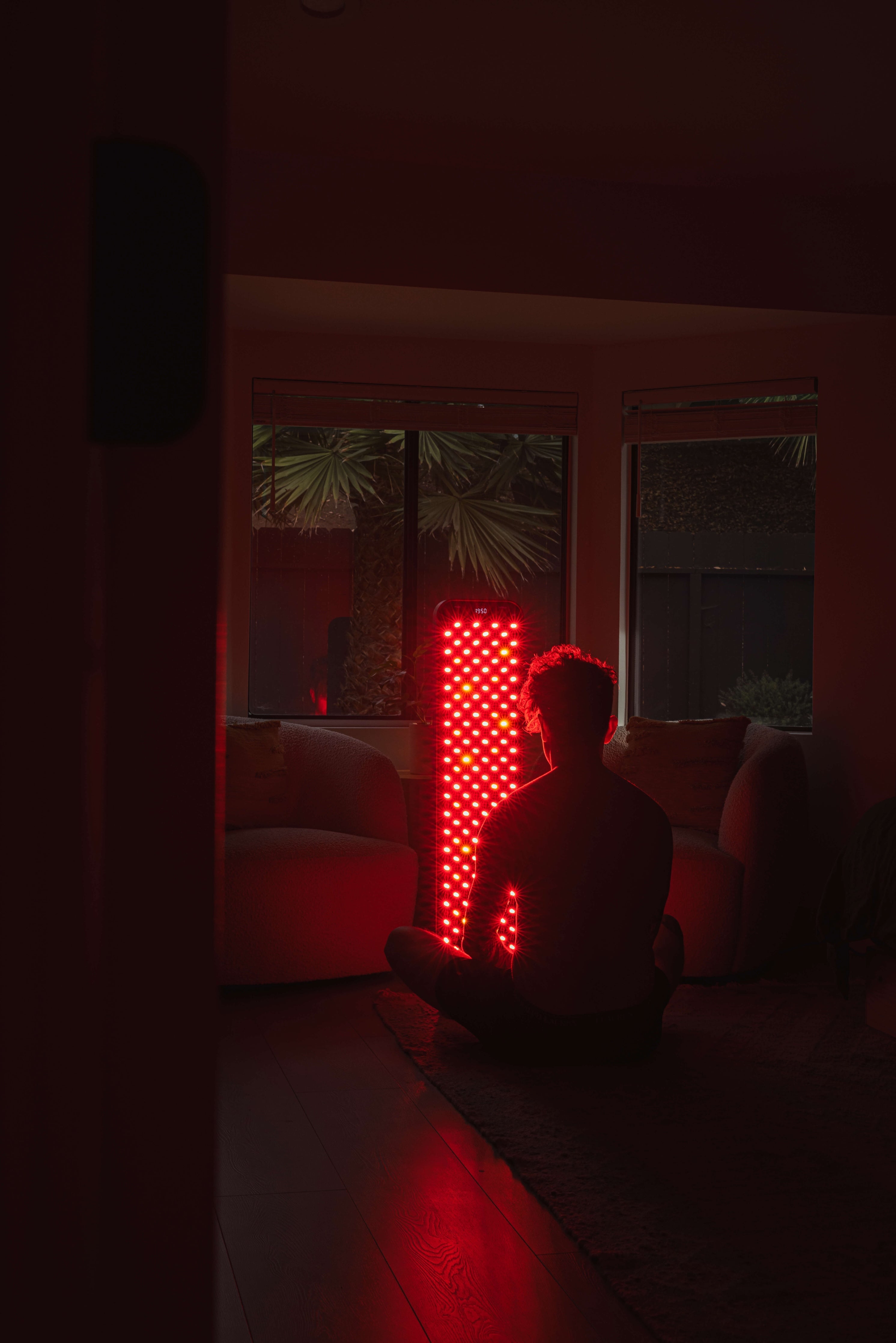
Position the panel 6 to 12 inches from bare skin. Closer means more intensity, which is why the published output matters: 150 milliwatts per square centimeter at 3 inches, 126 at 6. Most people use sessions of about 10 to 15 minutes per area, a few times a week. Consistency over weeks matters more than any single long session.
What do the six wavelengths do?
The panel runs three red wavelengths (610, 630, 660 nm) and three near-infrared (810, 830, 850 nm). Red light is absorbed closer to the surface, near-infrared reaches a little deeper. The 660 and 850 nm bands are the most studied. Having both is why one panel can support both the appearance of the skin and recovery after exercise.
Is it worth $2,250 when other panels cost half as much?
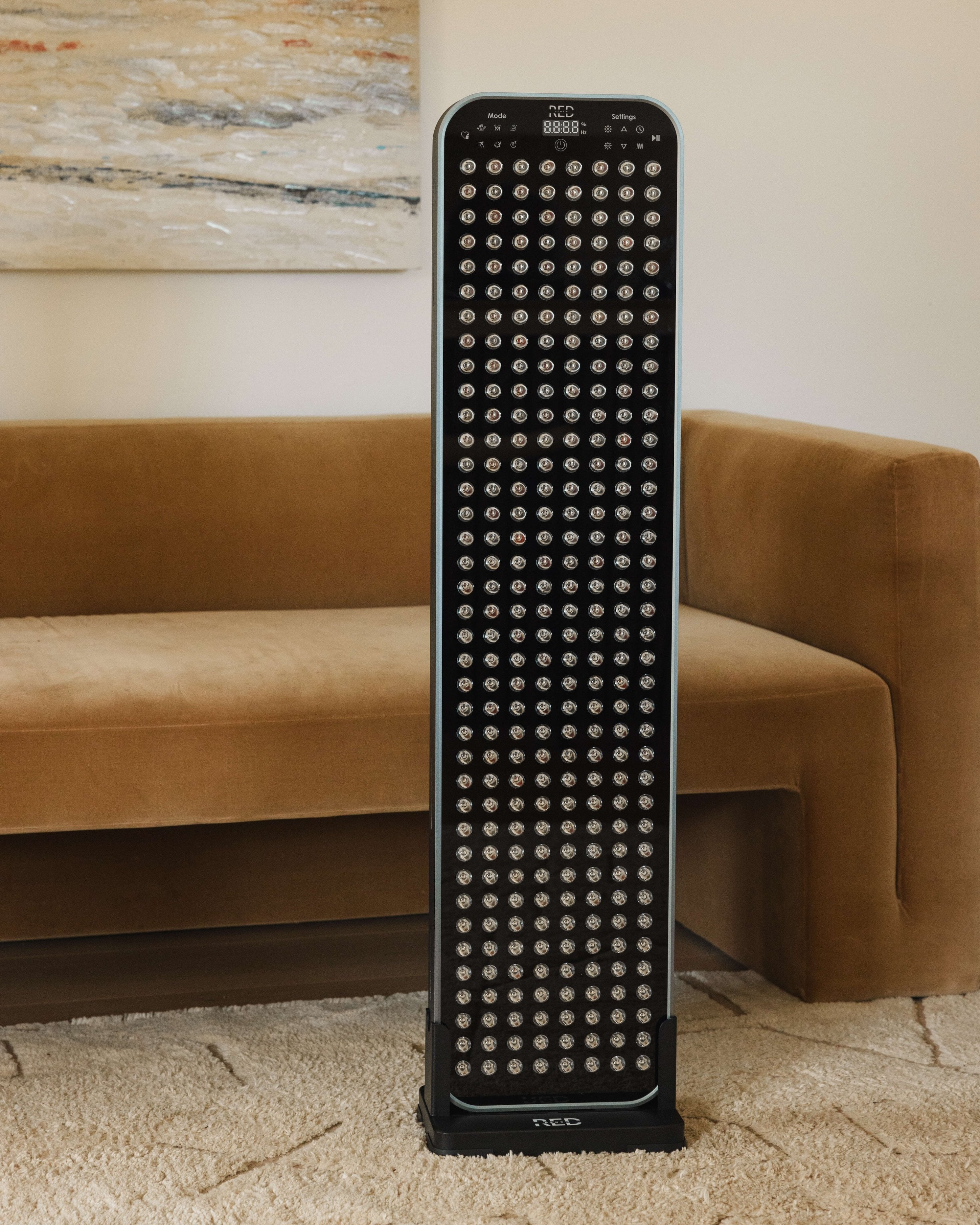
Fair question. Two things separate this one. First, coverage: at 43 inches it covers a whole region at once, so sessions are shorter than working a small light across the same area. Second, honesty and backing: Renew publishes its irradiance at stated distances, and covers the panel for three years plus a lifetime maintenance promise, longer than most. If you only want to spot-treat your face, a small panel is the cheaper, right tool. For whole-area sessions you will keep up, the size and the warranty are what you are paying for.
Will it bother my eyes, and is it safe?
The light is bright. Wear the included UV400 glasses and do not stare into the panel. Red light is generally well tolerated. Check with your doctor first if you are pregnant, take medication that increases light sensitivity (some antibiotics, retinoids, or St John's Wort), or have a condition affecting your eyes or skin. Start with shorter sessions and see how your skin responds.
Is it noisy or hot?
It runs low-EMF and flicker-free, with cooling fans that make a soft hum, quieter than a hair dryer but not silent. The panel gets warm, not hot. Neither is usually an issue in a bedroom or a home gym.
How is it powered and set up?
It plugs into any standard household outlet and needs no electrician or dedicated circuit. The panel attaches to the included folding floor stand in a few minutes, and the stand's wheels let you move it between rooms and tilt it to the angle you want.