How cold, and for how long?
Research points to roughly 52 to 59°F for 11 to 15 minutes as the useful window. Colder and longer is not better. The tub goes to 34°F, but most people settle into the mid-50s once they stop chasing a number.
What does cold immersion actually do?
It works as a sharp, controlled stress. Breathing quickens, heart rate climbs, attention narrows. Stay a few minutes and the system settles. That settling is what most people are after. Research suggests it may support post-exercise recovery and reduce perceived soreness, and the strongest analysis found stress meaningfully lower about 12 hours after a session rather than immediately.
Is it anti-inflammatory?
That is the most common misconception in the category. Evidence shows inflammation rises shortly after immersion rather than falls. Cold plunging is a recovery and stress-resilience tool, not an anti-inflammatory treatment.
When should I plunge relative to training?
Timing matters more than most sellers admit. Cold immersion soon after resistance training can blunt the muscle growth you trained for. Better on rest days, or after endurance and skill work, rather than straight after lifting for size.
Who should be cautious about cold immersion?
Cold water is a real cardiovascular and thermal stressor. Anyone with cardiovascular disease, uncontrolled high blood pressure, a cold-intolerance condition such as Raynaud's, or who is pregnant should speak with a clinician first. Acclimate gradually, never plunge alone or after alcohol, and consult a professional if you are unsure.
How cold does it actually get, and how fast?
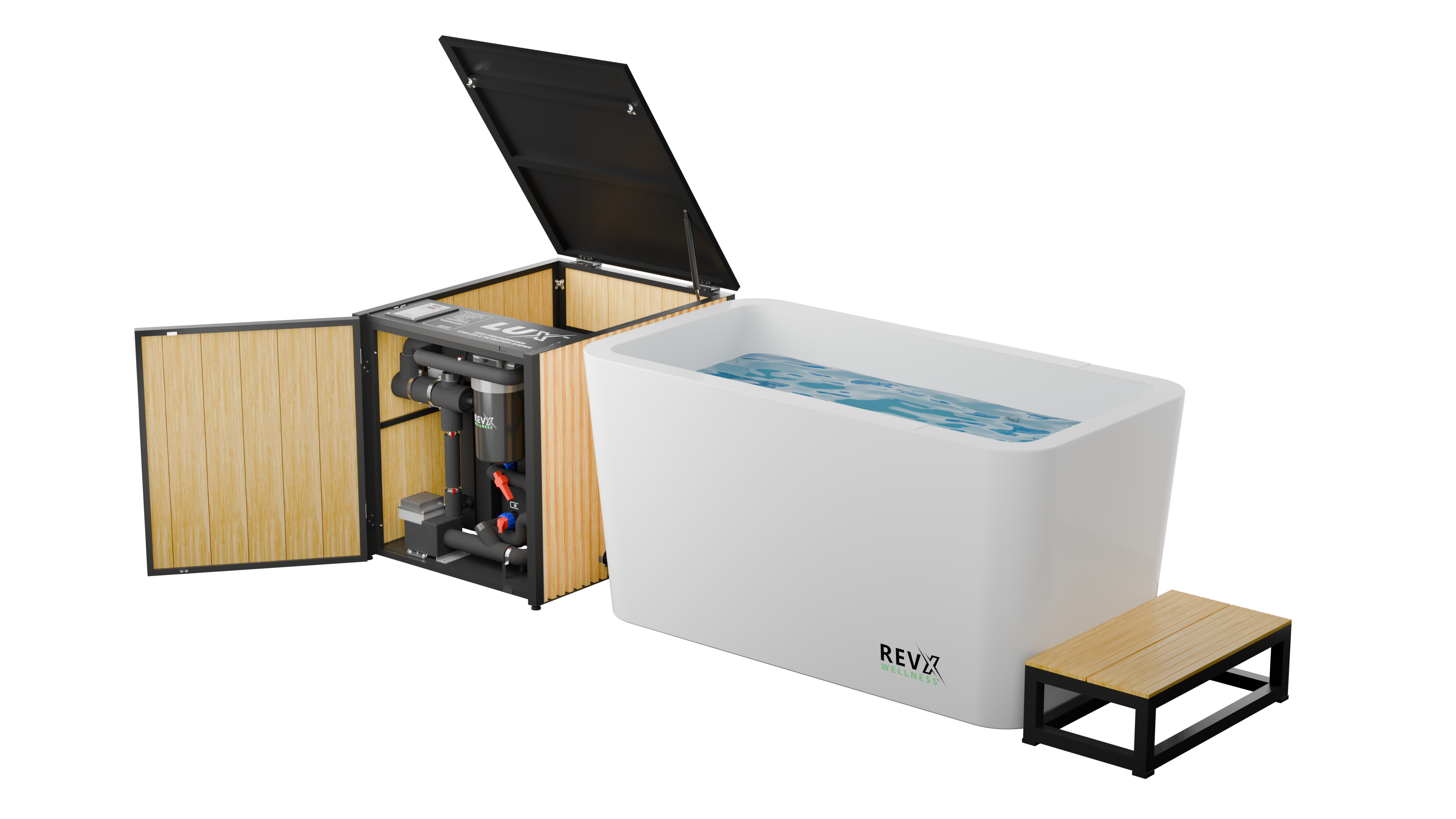
The LUX 1.5 HP chiller holds water from 34 to 104°F and chills roughly 80°F down to 40°F in about three hours, with a 3,500-watt cooling capacity. Real-world cool-down depends on ambient temperature, water volume, insulation, and whether the cover is on. The 3-inch foam insulation is what keeps it from working hard to hold temperature once it is there.
Can it live outside, and what about winter?
Yes, it is rated for indoor or outdoor use. In freezing weather it keeps running safely as long as you leave the chiller and pump powered around the clock and keep the set point at or above 40°F, which keeps water moving and prevents freeze damage. RevX publishes a winterization procedure for hard climates. If you cannot keep it powered through a deep freeze, drain it.
With the filtration, how often do I change the water?
The 20-micron filter, UV and ozone sanitation, and a weekly dose of food-grade hydrogen peroxide keep the water clear between changes. RevX recommends a full drain and refill about every 3 months, and a weekly check of the filter. More users means more frequent filter attention.
What does it cost to run?
The chiller is a 1.5 HP unit on a standard 110 to 120V circuit, drawing up to 11 amps while actively cooling and less when holding temperature. The 3-inch foam insulation reduces how often it has to run. Running cost varies with your climate, target temperature, and electricity rate, so treat any single figure with caution.
Do I need an electrician?
The chiller wants its own dedicated 15A, 110 to 120V GFCI circuit, and the filtration components run on separate outlets. If you already have a suitable dedicated circuit near the install spot, setup is straightforward. If not, a licensed electrician should add one.