What does a sauna session actually do?
This category, and this brand, are often marketed with strong medical claims. The evidence that holds up for everyday use is more modest, and it is the story we tell. A traditional sauna raises core temperature a degree or two, and the body responds much the way it does to moderate exercise: heart rate rises, vessels widen, you sweat. Afterward the nervous system settles. Research suggests regular sauna use may support relaxation and post-exercise recovery, and heat sessions may support healthy circulation. We keep our claims there.
How hot does it get, and can I make steam?
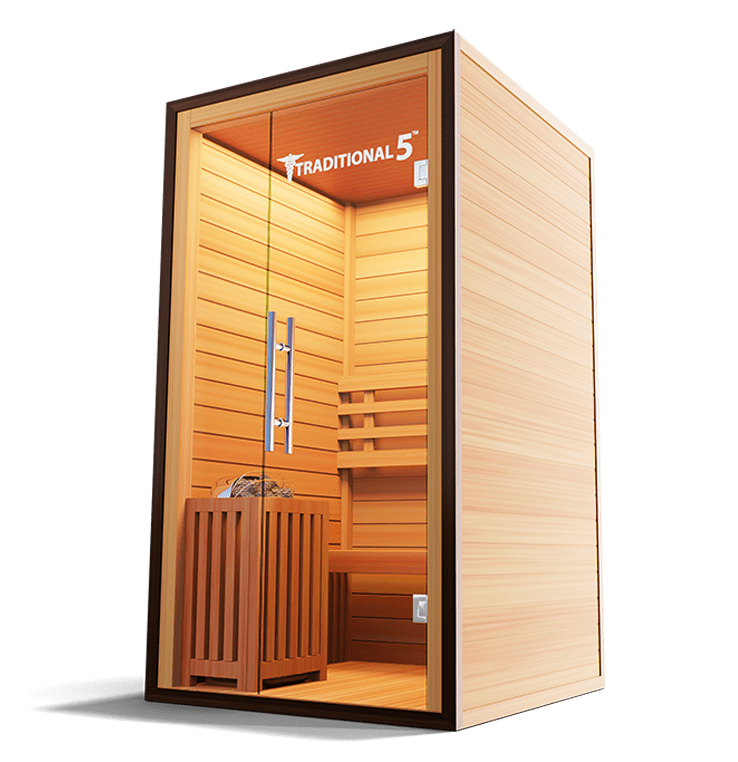
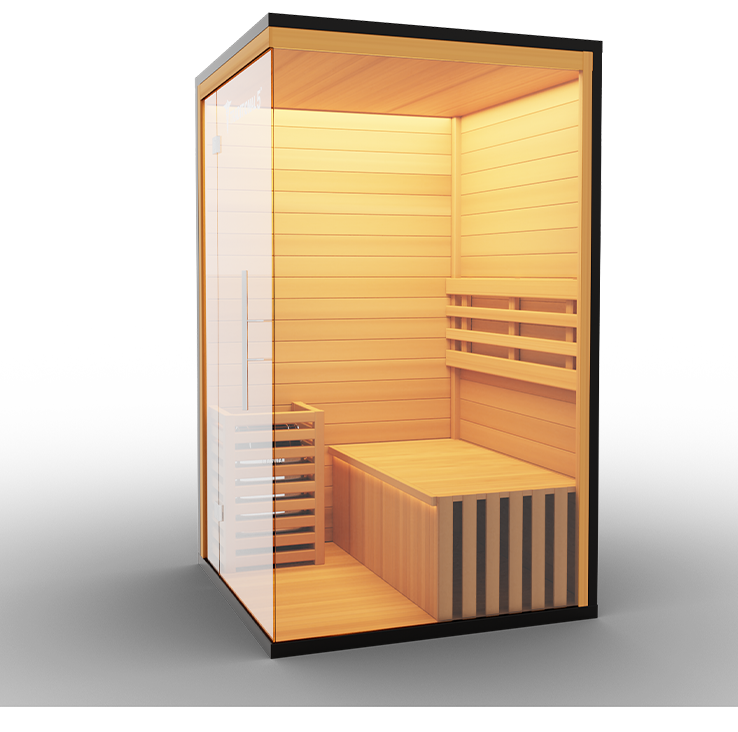
It is a traditional rock-heater sauna, not infrared, so you can ladle water onto the stones for loyly, the burst of steam infrared cannot produce. This cabin reaches up to about 194°F and warms to operating temperature in about 30 to 45 minutes, sooner in a warm room, slower in a cold basement. Pour water a small ladle at a time, not a constant stream.
Who should be cautious about sauna use?
Sauna heat is a real cardiovascular load, similar to moderate exercise. People with unstable heart conditions, uncontrolled blood pressure, or who are pregnant should get medical clearance first. Hydrate, start with shorter sessions, avoid alcohol, and step out if you feel lightheaded. Consult a professional if you are unsure.
What are the electrical requirements?
The 6,000-watt (6 kW) heater is hardwired, not plug-in: it needs a dedicated 220 to 250V, 40-amp circuit installed by a licensed electrician. A standard 120V outlet will not run it, and a condo with only 120V circuits is not a fit without an upgrade. Budget for the electrician; it is the cost buyers most often underestimate.
Does it need plumbing or a drain?
No. A traditional sauna is not a steam room. It has no water line and needs no drain. You make steam by pouring a ladle of water on the hot stones, which evaporates, so there is nothing to plumb.
How do I manage steam and moisture indoors, and where should it go?
The steam from ladling water is short-lived, but over months humidity adds up, so treat the room like a bathroom. A basement, a bathroom, or a room with a vent or exhaust fan is ideal; wipe the bench and leave the door open to dry after each session. Set it on a moisture-tolerant floor, not carpet, and keep at least 2 inches of clearance from surrounding walls. At 430 pounds plus occupants, confirm a second-floor subfloor can carry the load.
How does it ship and assemble?
It ships by freight as pre-built panels, around 430 pounds; expect curbside or liftgate delivery, and check the largest panel clears your doorways and stairs. The cabin assembles in roughly two to four hours with two people and basic tools. A licensed electrician makes the final heater connection.
How do I care for the hemlock?
Hemlock is left raw, not sealed. Wipe the benches after each use, let the cabin dry with the door open, and clean occasionally with water or a mild sauna-safe cleaner, never harsh chemicals. Address any dark spots early. Cared for, the wood lasts for years; left damp, any sauna wood can stain or develop mold.