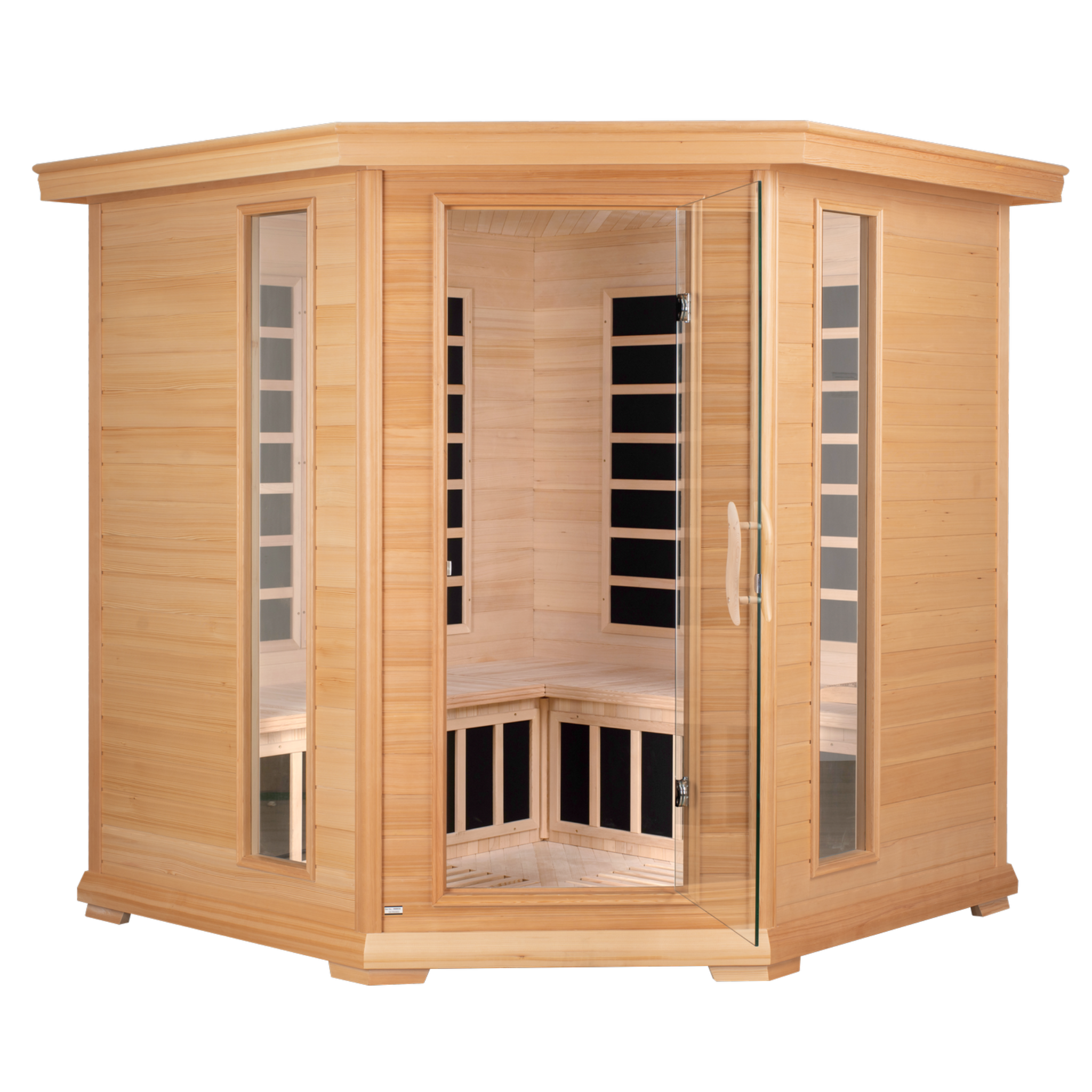
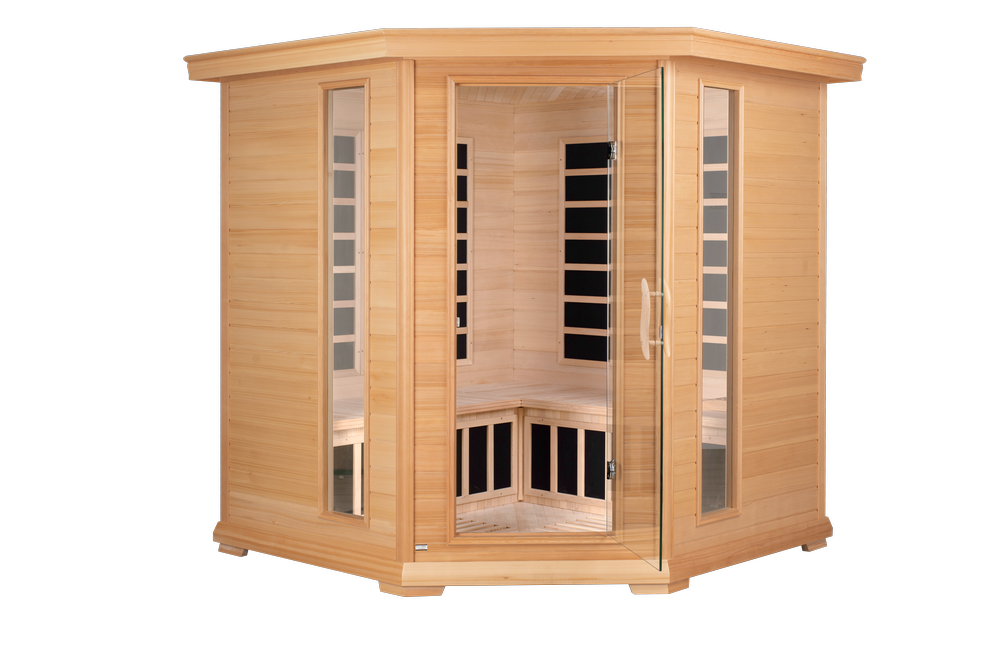
Does a far infrared sauna get hot enough, and how does it compare to a traditional sauna?
It is a real difference worth knowing before you buy. A far infrared cabin like this runs to about 140°F, where a traditional Finnish sauna runs 180 to 200°F. Infrared warms your body directly with radiant heat rather than heating the air, so you sweat at a lower air temperature, but it never feels as fierce as a high-heat Nordic sauna. If what you want is the hardest possible heat, a traditional sauna is the better tool. This one is built for gentler heat you can sit in longer and more often.
What does a far infrared session actually do?
This category, and this brand, are marketed with strong medical language. The honest, narrower version is the one we tell. Research suggests a far infrared session after exercise may reduce muscle soreness and support perceived recovery, though that rests on one small study, and heat sessions may support healthy circulation. Most people find the time afterward calming. The deeper, longer-term health research is in traditional high-heat sauna, not infrared; infrared's strength is gentle, comfortable recovery, and that is where we keep our claims.
What about EMF, and how do I trust a "low EMF" claim?
EMF from an infrared sauna comes from the heaters and wiring, not from the infrared light itself, and "low EMF" is not a standardized term. The reading that matters is taken at the seated position, not at the heater surface, so ask any brand for a third-party lab report with separate electric and magnetic readings where you actually sit. Blisspod builds the Vienna with low-EMF carbon heaters; we have asked the supplier for the measured figure at the seated position and will publish it here when we have it.
Who should be cautious about sauna use?
Sauna heat is a real cardiovascular load, similar to moderate exercise. People with unstable heart conditions, uncontrolled blood pressure, an implanted device, or who are pregnant should get medical clearance first. Hydrate, start with shorter sessions, avoid alcohol, and step out if you feel lightheaded. Consult a professional if you are unsure.
What are the electrical requirements?
This is the part buyers most often underestimate. At 2,250 watts and 18.75 amps on 10-gauge copper wiring, the Vienna is not a plug-and-play unit for a standard 15-amp outlet. It needs its own dedicated circuit installed by a licensed electrician, who will size the breaker for the load. Arrange this before delivery, and budget for the electrician as part of the purchase.
How long does it take to heat up, and how many people really fit?
A cabin this size, with a lot of glass, generally takes about 20 to 40 minutes to reach temperature, longer in a cold room. Preheat with the door closed. On capacity, treat 4 to 5 as the maximum packed number: it is comfortable for 3 to 4 adults, and the fifth seat is realistic mainly for a child or a very close fit.
How does it ship and assemble?
It ships by freight on a pallet in four boxes. Expect curbside delivery, and inspect the crate, especially the glass door, for damage before you sign. Assembly is a two-person afternoon with tongue-and-groove panels and basic tools; the panels are heavy, so plan a second set of hands and measure your access route against the box dimensions first.
Will it smell like new wood or glue at first?
A mild new-wood scent is normal. Run the sauna empty at high heat for a few sessions with the door cracked and the vents open before real use, which airs out most of it. The hemlock is low-resin and non-aromatic, so it does not carry the strong cedar smell some people prefer to avoid.