What does a sauna session actually do?
A traditional sauna raises core temperature a degree or two, and the body responds much the way it does to moderate exercise: heart rate rises, vessels widen, you sweat. Afterward the nervous system settles. Research suggests regular sauna use may support relaxation and post-exercise recovery, and heat sessions may support healthy circulation. We keep our claims there; the stronger, disease-related sauna research describes the long-term practice and does not belong on a product page.
How hot does it get, and can I make real steam?
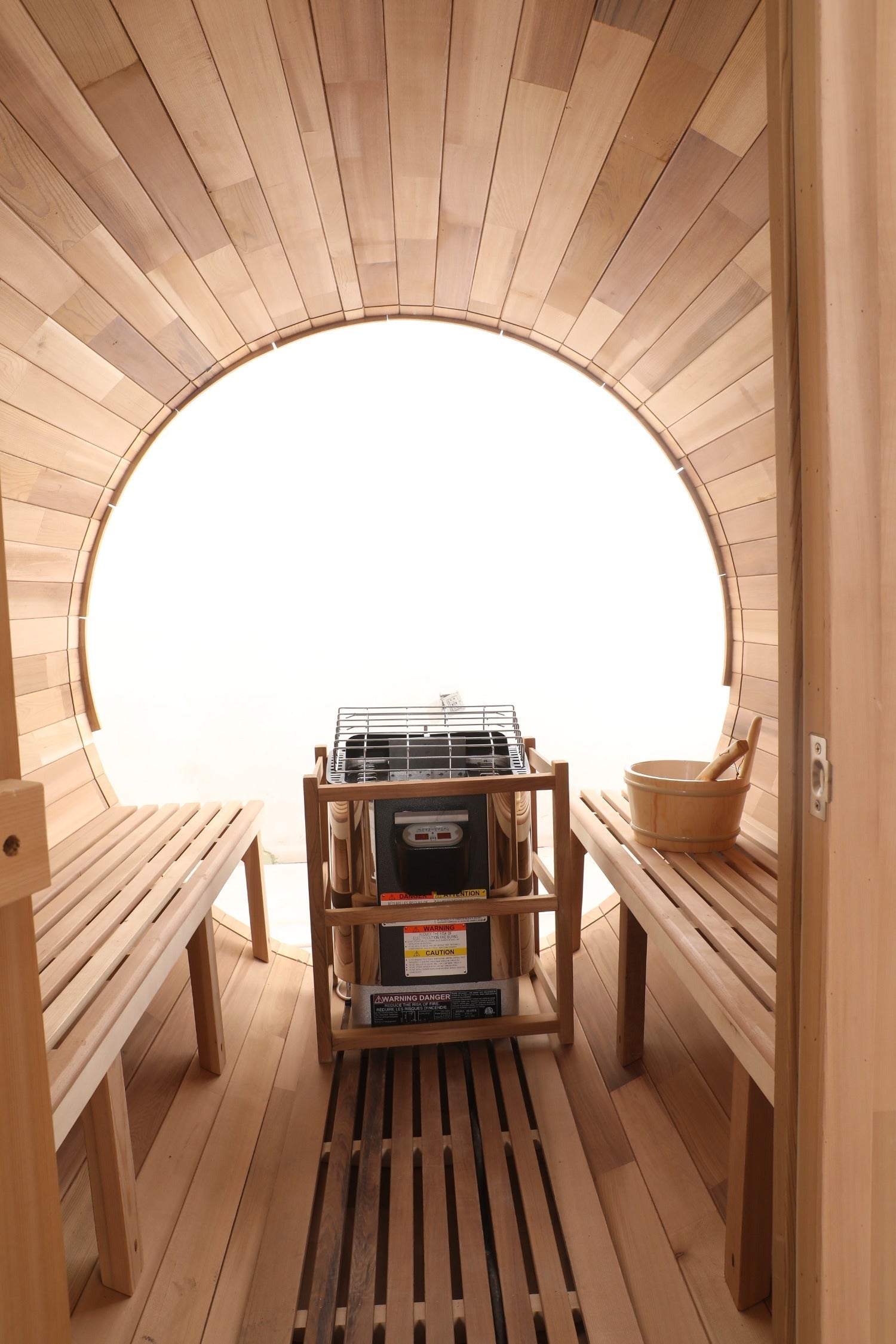
The heater reaches up to about 90°C (194°F). Because it is a traditional heater with stones, you can pour water for loyly, the burst of steam an infrared cabin cannot produce. Be realistic about cold climates: a large glass back is a thermal weak point, so in deep winter the Prague can take longer to heat and may sit below its top temperature. Preheat longer and keep the door closed.
Who should be cautious about sauna use?
Sauna heat is a real cardiovascular load, similar to moderate exercise. People with unstable heart conditions, uncontrolled blood pressure, or who are pregnant should get medical clearance first. Hydrate, start with shorter sessions, avoid alcohol, and step out if you feel lightheaded. Consult a professional if you are unsure.
What are the porch seats for, and does the porch make the sauna smaller?
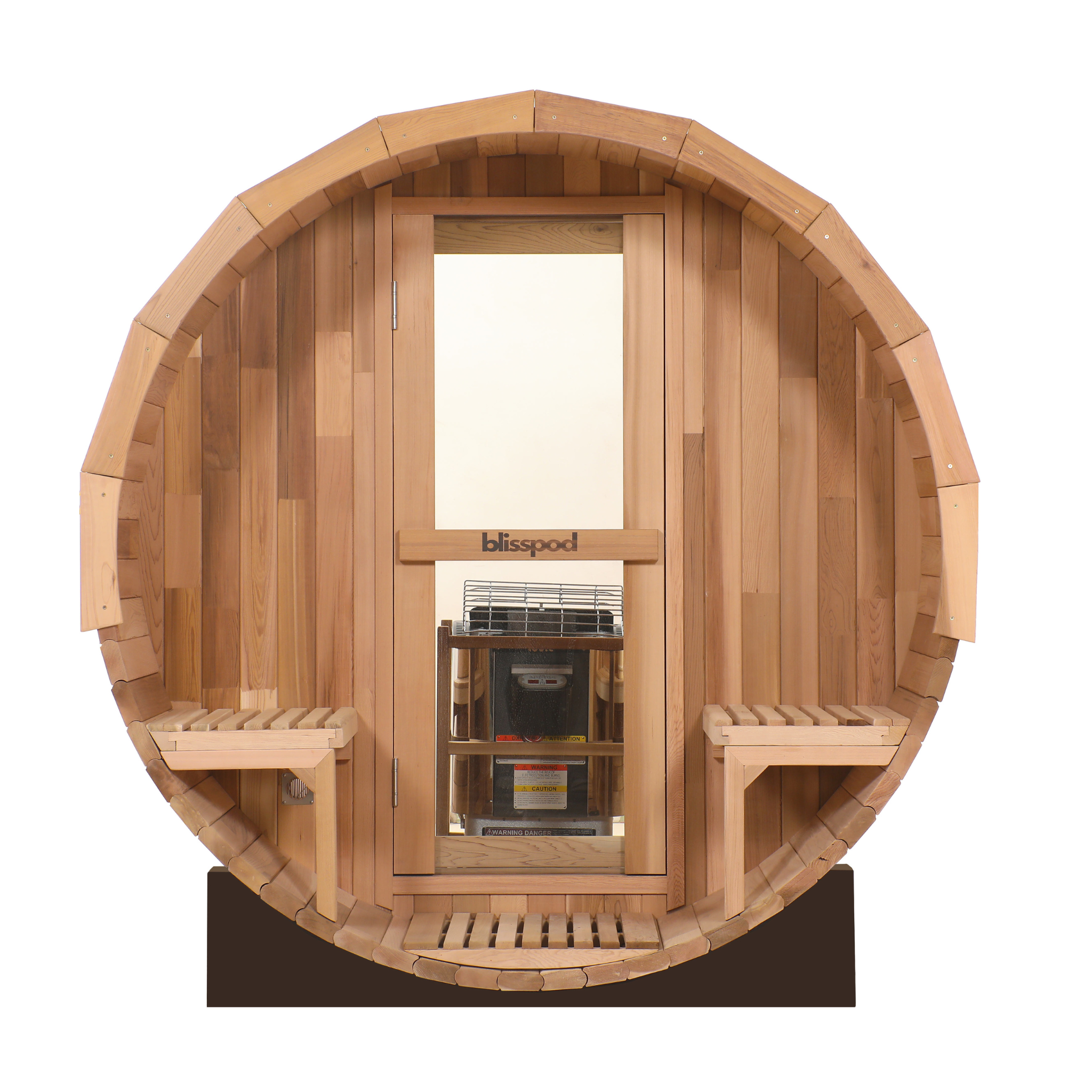
The two covered porch seats are a cool-down perch. The value of a sauna is often the contrast, so you heat inside, step onto the porch to cool in the open air, then go back in, without crossing the yard. The honest tradeoff: the porch is built into the front of the barrel, so the interior is shorter than the plain glass-back Prague. That is why this model is rated 2 to 4 (180 cm) and 4 to 6 (240 cm), a little lower than the porch-free version. If maximum interior room matters more than a cool-down seat, choose the plain glass-back Prague.
What are the electrical requirements?
The 6 kW heater is hardwired, not plug-in: 220 to 240V, about 27 amps, on its own dedicated circuit sized by a licensed electrician, with outdoor-rated GFCI. Budget for that install; it is the cost buyers most often underestimate.
What base does it need?
A level, well-drained base rated for the weight (a cedar barrel this size runs several hundred pounds empty, more with water and people) and freeze-thaw: a gravel pad or a load-rated deck, not bare grass. Leave clearance around the barrel for airflow and maintenance.
How is it delivered, and how hard is assembly?
It ships by freight on a pallet; expect curbside or liftgate delivery and plan help to move it. Inspect the crate before signing. The cedar kit is prefabricated and goes together in an afternoon with two people and basic tools. The structure is DIY; the electrical is the electrician's part.
How do I care for cedar and glass outdoors, and in winter?
Canadian red cedar is naturally weather-resistant, and the curved shingled roof sheds rain and snow. It is not maintenance-free: treat the exterior on a schedule, keep the base draining, and wipe condensation off the glass after steam sessions. Cared for, cedar lasts years outdoors; neglected, any barrel can gray, check, or leak.