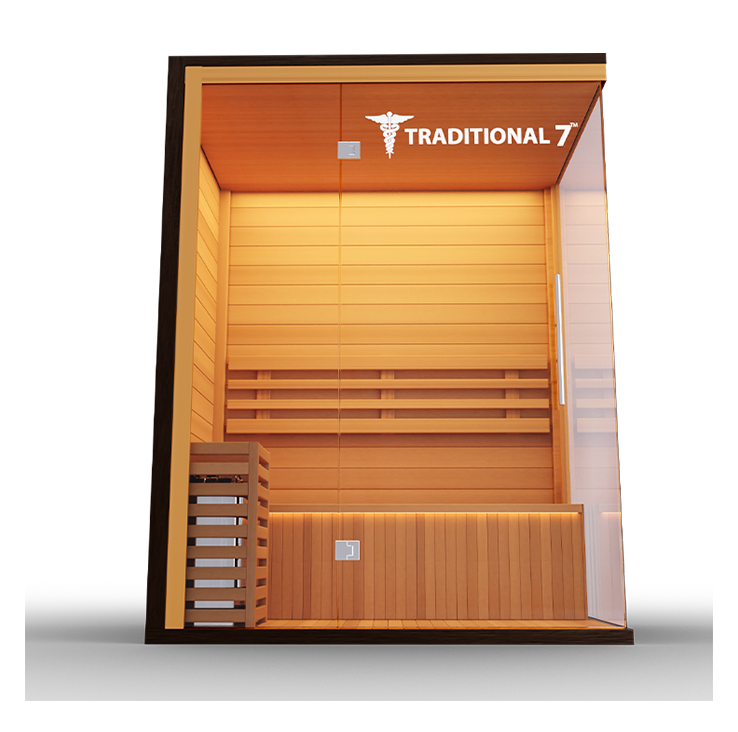
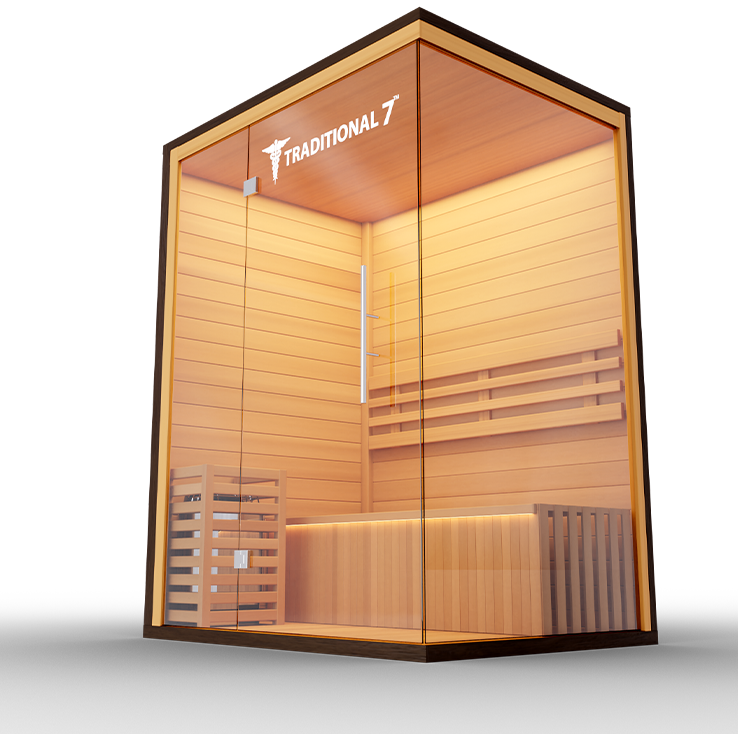
Is this a traditional sauna or an infrared sauna?
Traditional. A 4,500-watt electric heater warms the air to a genuine high-heat temperature, and you can pour water over the heated stones for loyly, the classic Finnish steam. Infrared cabins run much cooler and warm your body directly instead. If you want the authentic, hot sauna experience, this is that.
What does a sauna session actually do?
Most people use it to relax and unwind. A hot session warms you through and raises your heart rate in a way that feels similar to gentle exercise, and many find the time afterward calming. Research on sauna suggests it may also support post-exercise recovery. We keep our claims there; a sauna is a wellness ritual, not a medical treatment.
How hot does it get?
A traditional electric sauna like this reaches a true high heat, generally in the 160 to 195°F range, far hotter than an infrared cabin. It takes a while to warm up from cold, so most people start it before they plan to use it.
Does it need special electrical work?
Yes. Unlike an infrared cabin that plugs into a wall, this traditional heater needs a dedicated 220 to 250V, 30-amp circuit installed by a licensed electrician. Many homes need a panel check first, so confirm your electrical before ordering.
Is a sauna safe for everyone?
Traditional sauna is generally well tolerated by healthy adults, but the heat is a real cardiovascular load. Check with your doctor first if you have unstable heart disease, a recent heart attack, uncontrolled blood pressure or arrhythmia, or are pregnant. Hydrate before and after, avoid alcohol, start with shorter sessions, and step out if you feel lightheaded.
How does it ship and assemble?
It ships by freight on a pallet and is heavy at 460 pounds, so inspect for damage before signing and note anything on the paperwork. The cabin is clasp-together panel construction, a job for two or more people with no special tools; measure your doorways and turns against the largest panel first.