What does an infrared sauna session actually do?
This brand, and this category, are marketed with strong medical language. The evidence for infrared specifically is narrower than the marketing suggests, and the narrower version is the one we tell. Infrared warms the body with radiant heat rather than heating the air. Research suggests a session after training may reduce muscle soreness and support perceived recovery, though that rests on one small trial, and heat sessions may support healthy circulation. Most people find the time afterward calming. We keep our claims there; it is comfort and routine, not a medical treatment.
How hot does it get, and how does that compare to a traditional sauna?
Infrared cabins generally run about 120 to 150°F, where a traditional Finnish sauna runs 160 to 195°F. Infrared heats the body directly rather than the air, so you sweat at a lower air temperature, with a slower build and gentler heat over a longer session. If you want the blast of a hot Finnish sauna, this is not that.
What about EMF?
EMF is the most common concern with infrared, and low EMF is not a standardized term. Readings vary most by where they are taken: a measurement at the heater surface will always be higher than one at the bench. If a measured figure matters to your decision, contact us before ordering and we will request it from the manufacturer.
Is there anyone who should be cautious about sauna use?
Sauna heat is a real cardiovascular load, similar to moderate exercise. People with unstable heart conditions, uncontrolled blood pressure, a pacemaker or implant, or who are pregnant should get medical clearance first. Hydrate, start with shorter sessions, avoid alcohol, and step out if you feel lightheaded.
Does it need special electrical work?
No, and for a six-person cabin that is unusual. It runs on 2,250 watts on a standard 120-volt, 15-amp household outlet, with no electrician and no 240-volt line. Plug it into an outlet not shared with other heavy appliances to avoid tripping a breaker.
How does it ship and assemble?
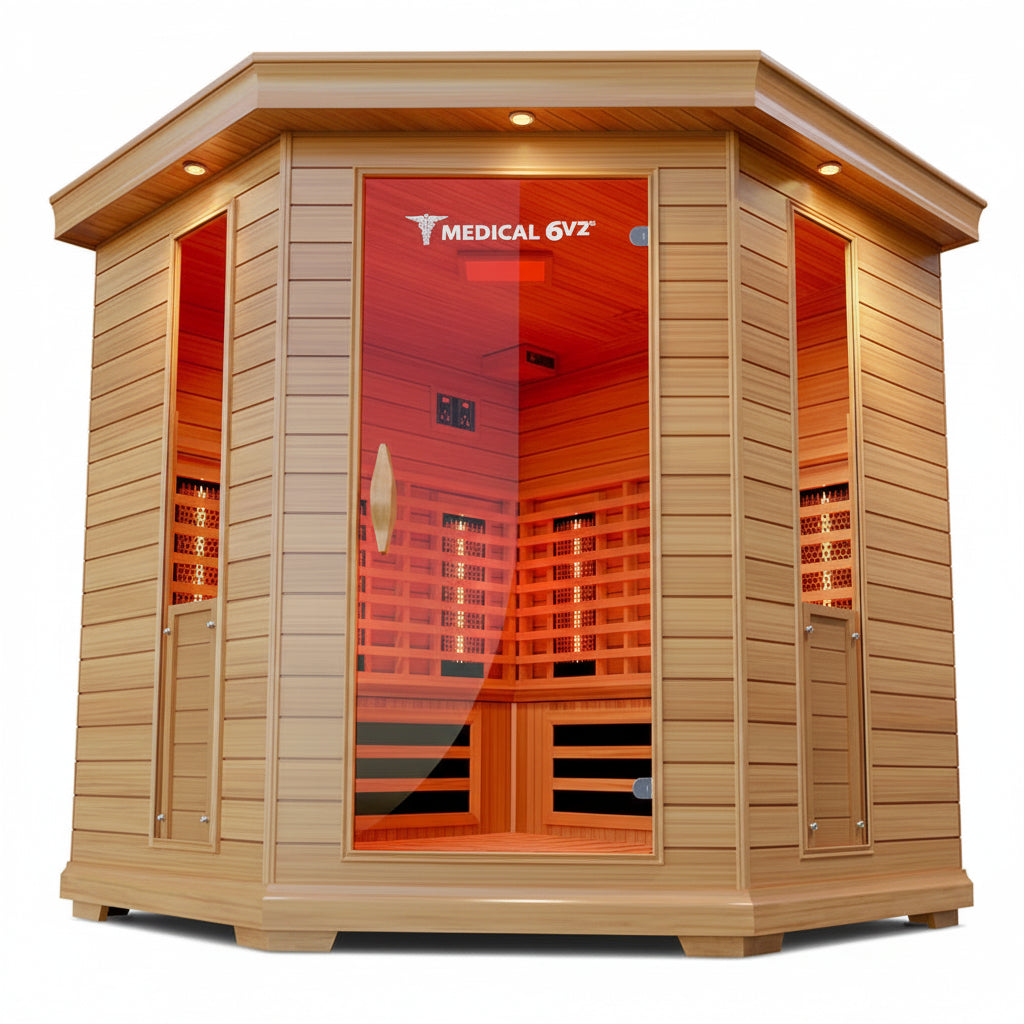
It ships by freight on a pallet and is heavy at 625 pounds, so be there to inspect for damage before signing and note anything on the paperwork. The cabin is clasp-together panel construction, a job for two or more people with no special tools; measure your doorways and turns against the largest panel first.