Skip to content

Medical 4 Indoor Full Spectrum Infrared 2-Person Sauna

Sale price$5,849.00 Regular price$11,999.00

Medical 4 Indoor Full Spectrum Infrared 2-Person Sauna
Medical 4 Indoor Full Spectrum Infrared 2-Person Sauna Sale price$5,849.00 Regular price$11,999.00
Description

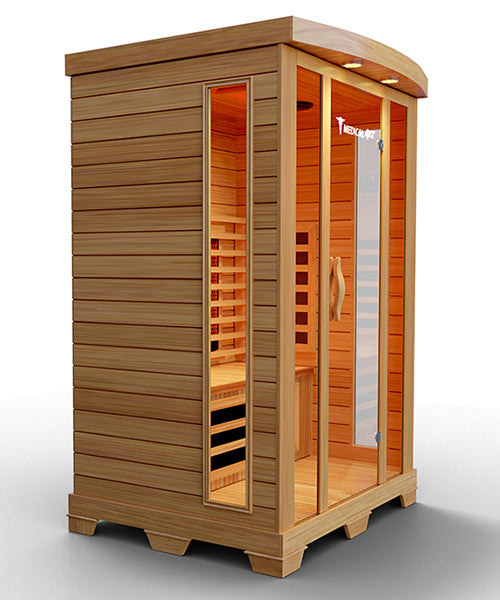
The Medical 4 is a two-person indoor infrared sauna: a hemlock cabin with six full spectrum heaters, sized to fit a spare bedroom, a home office corner, or a finished basement.

What separates it from most cabins at this price is what it does not need. It runs on 1,700 watts at 120 volts and plugs into a standard household outlet, so there is no electrician, no 240-volt line, and no permit the way a Finnish sauna demands.

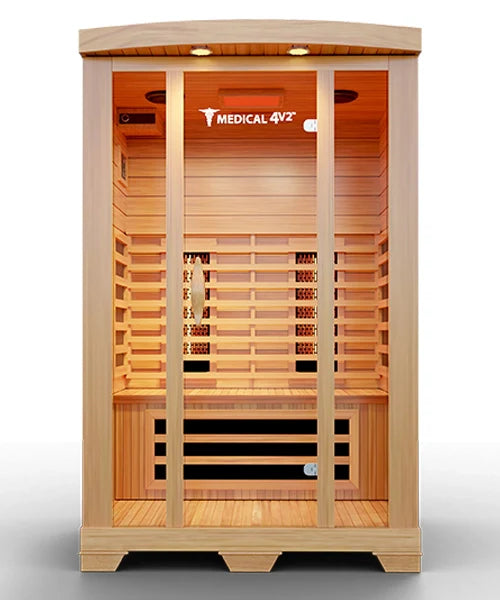
The cabin is natural hemlock with a tempered glass door. Six full spectrum heaters are rated to reach full temperature in about 40 minutes, and inside you get interior and exterior touch panels, chromotherapy lighting, a reading light, and a speaker system with AUX and radio.

Two honest notes. Two adults fit, though at about 47 by 42 inches of floor space it is close quarters, and most owners use it alone. And infrared runs cooler than a Finnish sauna: gentler heat over a longer session.

Put it in the room you already walk past twice a day. The sauna that gets used is the one that is not a trip.

Product Features

Highlights

  • No electrician needed: 1,700 watts on a standard 120-volt outlet, so it goes where a normal appliance goes.
  • Ready in about 40 minutes: six full spectrum heaters, rated to reach full temperature well ahead of most cabins.
  • Fits a spare room: about 47 by 42 inches of floor space, a little larger than a shower stall.
  • Natural hemlock and tempered glass: a light, aromatic wood that stands up to repeated heat cycles.
  • Light and sound built in: chromotherapy, an interior reading light, and a speaker system with AUX and radio.
  • Backed for 3 years: Medical Saunas warrants the line for three years.

Specifications

  • Capacity: 1 to 2 people
  • Materials: natural hemlock cabin, tempered glass door
  • Dimensions, exterior: 47 in W x 42 in D x 77 in H
  • Dimensions, interior: 43 in W x 37 in D x 68 in H
  • Weight, assembled: 405 lb
  • Weight, shipping: approx. 450 to 465 lb (3 cartons on a pallet)
  • Heating system: 6 carbon full-spectrum infrared heaters (near, mid, and far infrared), including 2 front-facing panels
  • Heat-up time: rated to reach full temperature in about 40 minutes
  • Electrical: 120V, 15 amp, 1,700 W, standard household outlet, dedicated circuit recommended
  • Controls: interior and exterior touch LED control panels
  • Audio: speaker system with AUX/MP3 connection and radio
  • Lighting: chromotherapy system, interior reading light, exterior mood lighting
  • Assembly: tool-free clasp-together panel construction
  • Warranty: 3-year limited, covering parts, labor, and structure (cabin, heaters, and control electronics) against factory defects
  • Box contents: Canadian hemlock structural panels, 6 full-spectrum heaters, bench seating, tinted tempered glass door, wooden backrests, LED control panel, chromotherapy and reading lights, audio system

Delivery and Setup Considerations

  • Shipping: Freight, 3 cartons on a pallet, approx. 450 to 465 lb gross. Be present to inspect for damage before signing and note anything on the delivery paperwork; replacement panels can take weeks.
  • Assembly: Tool-free clasp-together panels, about 45 to 60 minutes with two people. Measure doorways, stairs, and tight turns against the largest panel before delivery.
  • Site prep: Arrange a dedicated 120V, 15-amp circuit. Place on a level floor with the manufacturer's wall clearances.
  • Care: Wipe the bench after each session and leave the door open to dry. A towel on the bench cuts most of the cleaning.
FAQ

What does an infrared sauna session actually do?
This brand, and this category, are marketed with strong medical language. The evidence for infrared specifically is narrower than the marketing suggests, and the narrower version is the one we tell. Infrared warms the body with radiant heat rather than heating the air around it. Research suggests a session after training may reduce muscle soreness and support perceived recovery, though that rests on one small trial. Heat sessions may also support healthy circulation, and most people find the period afterward calming. We keep our claims there.

How hot does it get, and how does that compare to a traditional sauna?
Infrared cabins generally run about 120 to 150°F, where a traditional Finnish sauna runs 160 to 195°F. Infrared heats the body directly rather than the air, so you sweat at a lower air temperature, but the feel is different: a slower build and gentler heat over a longer session. If what you want is the blast of a hot Finnish sauna, this is not that, and a traditional cabin is the better fit. This one is built for gentle heat you will do often.

Is full spectrum worth paying for?
Far infrared does most of the work people buy a sauna for, the deep warmth and the sweat. Near and mid infrared sit on top of that, and the research separating them in everyday use is thin. Full spectrum is a real upgrade on paper, and it is what this cabin has, but if someone tells you near infrared is the reason to buy, that is marketing running ahead of the evidence. Build quality, EMF design, and whether the sauna sits somewhere you will actually use it matter more.

What about EMF?
EMF is the most common concern with infrared, and low EMF is not a standardized term, so it helps to know what to ask. Readings vary most by where they are taken: a measurement at the heater surface will always be far higher than one at the bench where you sit. Ask any brand for a third-party lab report with separate electric and magnetic readings taken at seated positions. For context, independent guides note that even a relatively high bench reading sits at a small fraction of international exposure limits. Medical Saunas designs its cabins for low EMF using shielded wiring and grounded heaters.

Who should be cautious about sauna use?
Sauna heat is a real cardiovascular load, similar to moderate exercise. People with unstable heart conditions, uncontrolled blood pressure, or who are pregnant should get medical clearance first. Hydrate, start with shorter sessions, avoid alcohol, and step out if you feel lightheaded. Consult a professional if you are unsure.

What are the electrical requirements?
1,700 watts on a standard 120-volt, 15-amp household outlet. No electrician, no 240-volt line. One caution: 1,700 watts draws close to everything a 15-amp circuit can supply, so give it a circuit of its own. Sharing with a space heater, a treadmill, or a window air conditioner is the usual cause of a tripped breaker. If the only outlet in the room is shared with heavy appliances, have an electrician add a dedicated circuit. That is a modest job next to the 240-volt work a traditional sauna needs.

What does it cost to run?
At 1,700 watts, a 45-minute session uses roughly 1.3 kilowatt hours, about 20 cents at the US average electricity rate. Four sessions a week comes to a few dollars a month. Running cost is not the expense that matters on a sauna. Whether it gets used is.

How does it ship and assemble?
It ships by freight on a pallet in three cartons. Be there to inspect for damage before signing, and note anything on the delivery paperwork, because replacement panels can take weeks. The cabin is tool-free clasp-together panel construction rather than bolted, and it is a two-person job of about 45 to 60 minutes: the panels are manageable but awkward alone. Before delivery, measure your doorways, stairs, and any tight turns against the largest panel. That, more than the assembly, is where people get stuck.

About Medical Saunas

Medical Saunas is a California-based company that builds full-spectrum infrared cabins alongside traditional steam saunas, for the home and for light commercial use. The range runs from one-person infrared cabins to larger multi-person rooms.</p>

The engineering is straightforward and well-specified. The infrared models carry full-spectrum heaters, near, mid, and far, and are designed for low EMF, the specification most infrared buyers scrutinize. Cabins are built in Canadian hemlock, and the personal infrared units run on a standard 120-volt household outlet, so most need no electrician. Each sauna is backed by a three-year warranty.